
Trim Work
Crown Moulding & Trim Carpentry in Toronto
Crown moulding, baseboard, door and window casing and chair rail.
Trim is the fine work that closes a room: crown moulding, baseboard, door and window casing and chair rail.
Mitres are cut tight, joints filled and sanded, and gaps scribed out against walls and floors that are rarely square. It is the last thing installed and the first thing a visitor touches.
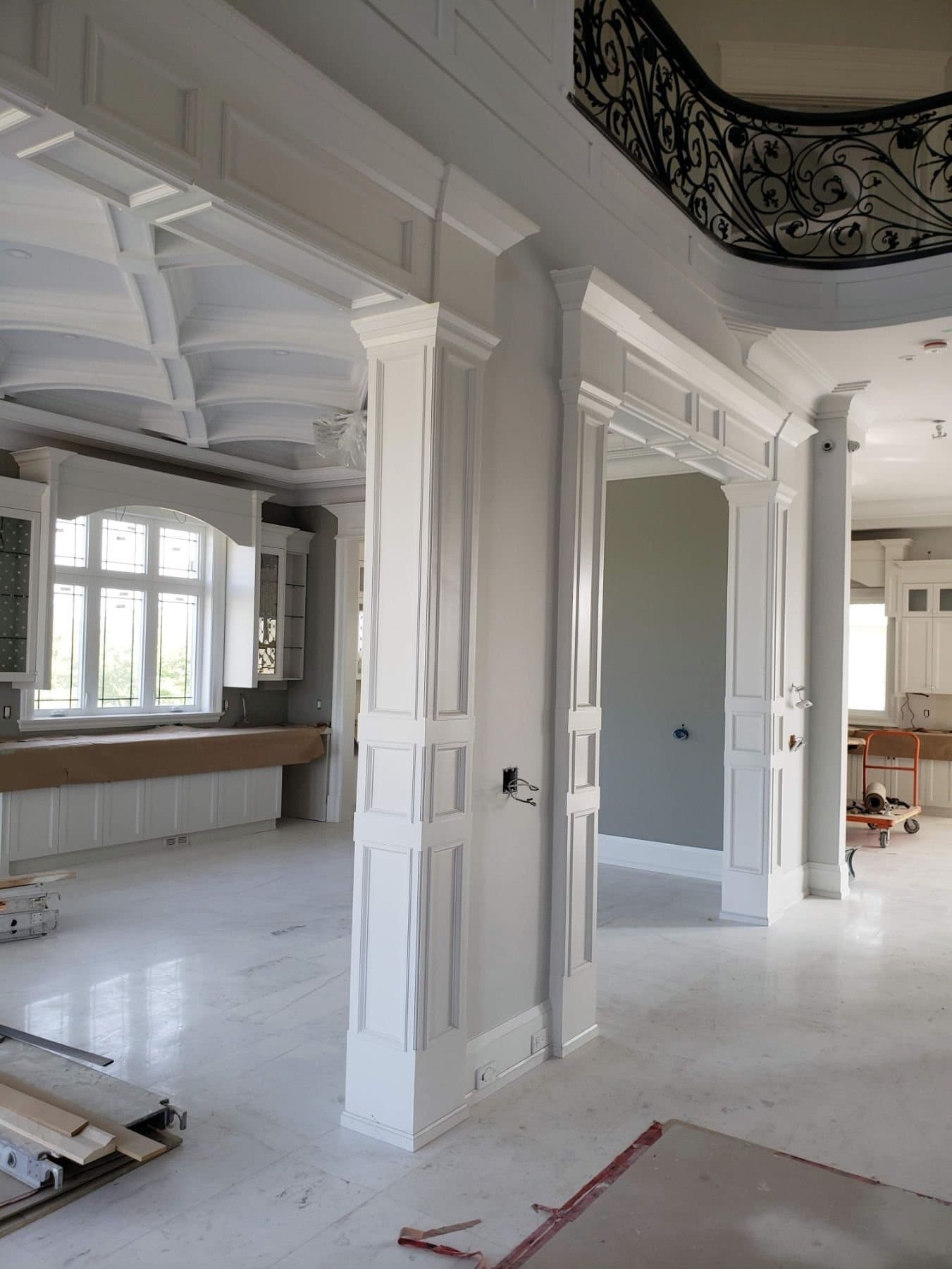
- Covers
- Crown, baseboard, casing, chair rail
- Mitres
- Cut tight, on site
- Joints
- Filled and sanded
- Fitted
- Scribed against walls and floors as they are
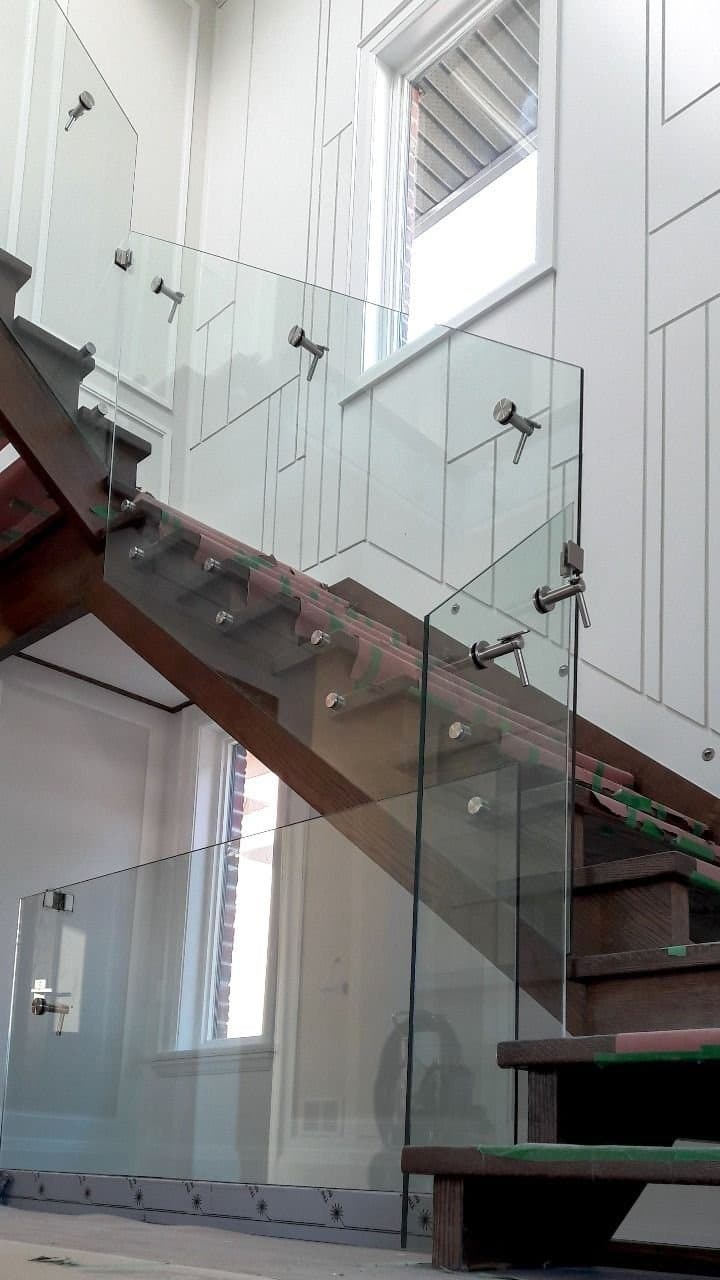
Glass railing
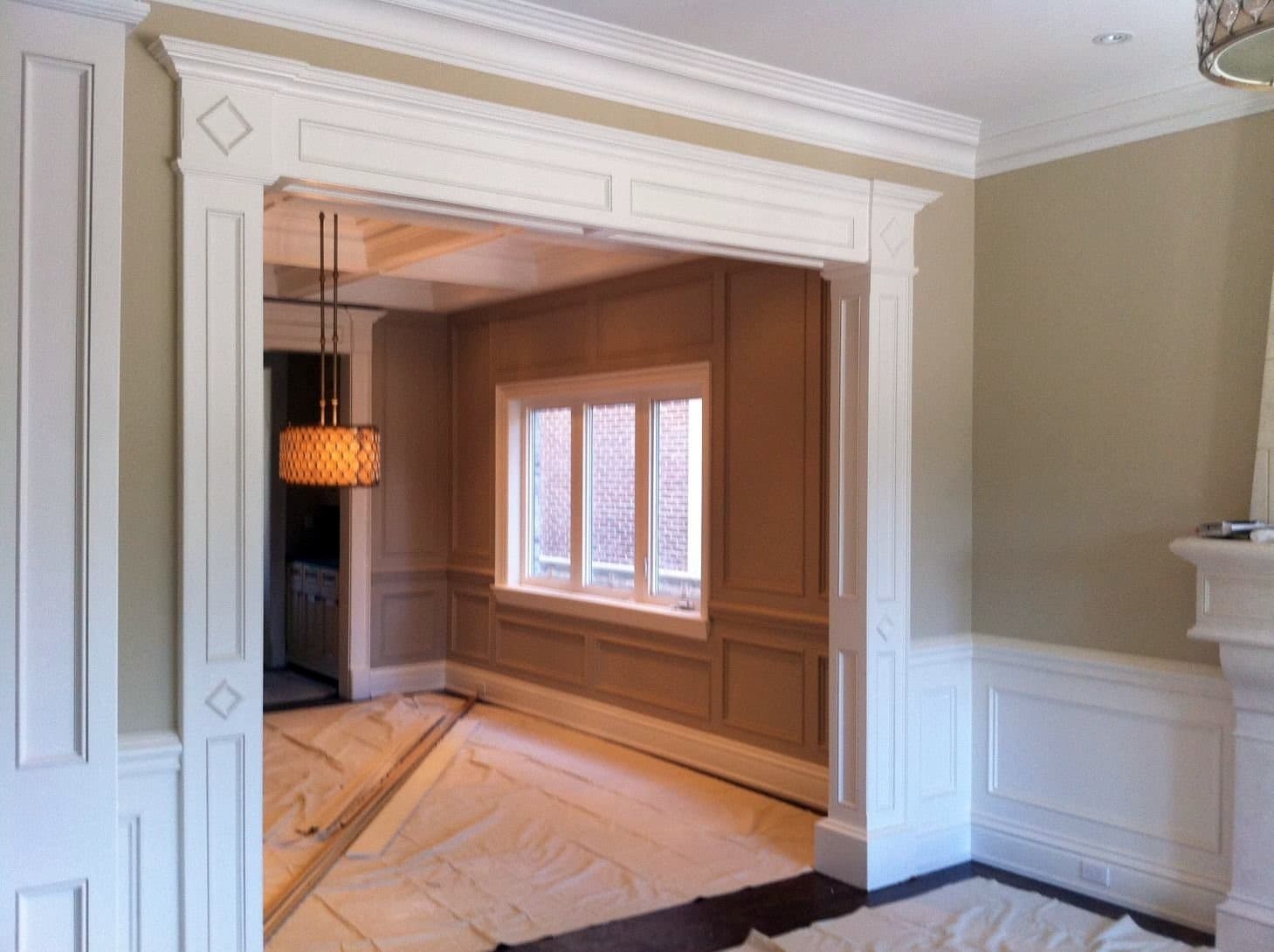
Cased opening
What we build
- Crown moulding
- Baseboard
- Door casing
- Window casing
- Chair rail
- Picture rail
- Mitred returns
- Stair panelling and skirt
- Scribing to out of square walls
What changes the price
Trim is priced by the length of the runs and by how many corners, openings and returns they have to turn.
- Linear length. Crown, baseboard and chair rail are measured by the run, room by room.
- Corners and returns. Every inside and outside corner is a mitre or a cope. A room with many corners takes longer per foot than a long straight wall.
- The size of the profile. A large crown built up from several pieces is more material and more cutting than a single moulding.
- Ceilings and walls as they are. Ceilings out of level and walls out of plumb are scribed rather than caulked, which is slower and lasts.
- Doors and windows to case. Casing is counted per opening, and each opening has its own head, legs and returns.
- What comes off first. Replacing trim means removing the old trim cleanly before the new goes on.
How the job runs
1 · Site visit
We come to the house and see the walls, floors and ceilings the work will meet.
2 · Measured and priced
We measure the work ourselves and put the price in writing, at no charge.
3 · Built and fitted
Cut and fitted on site, scribed to the walls and floors as they stand.
4 · Ready for paint
We leave the work filled and sanded, ready for your painter.
We work across Toronto, North York, Etobicoke, Kleinburg, King City, Nobleton, Oakville, Mississauga. Areas we serve
Common questions
What is crown moulding?
The trim that runs where the wall meets the ceiling. It closes the joint between the two and gives the room a finished line at the top, which is why a room without it reads as unfinished even when nothing else is missing.
What is the difference between casing and baseboard?
Casing frames a door or a window. Baseboard runs along the bottom of the wall where it meets the floor. Both close a joint, at opposite ends of the room.
Why is trim scribed instead of filled with caulk?
Caulk hides a gap for a season and then splits along it. Scribing cuts the trim to the shape of the wall or the floor it meets, so the joint is tight before anything is filled.
Which rooms get crown moulding?
Usually the rooms with the highest ceilings and the most traffic: the living room, the dining room, the primary bedroom and the hallways that connect them. It reads as flat in a room with a low ceiling.
What size crown moulding suits my ceiling?
Taller ceilings take a larger crown. A small profile disappears in a tall room, and a large one makes a low room feel lower. The size is chosen against the room, and it is easiest to judge with a sample held in place.
Can crown moulding go on a ceiling that is not level?
Yes. The gaps are scribed out rather than filled, so the line reads straight to the eye even where the ceiling is not.