
Trim Work
Choosing a crown moulding size for your ceiling height
September 25, 2026 · 4 min read
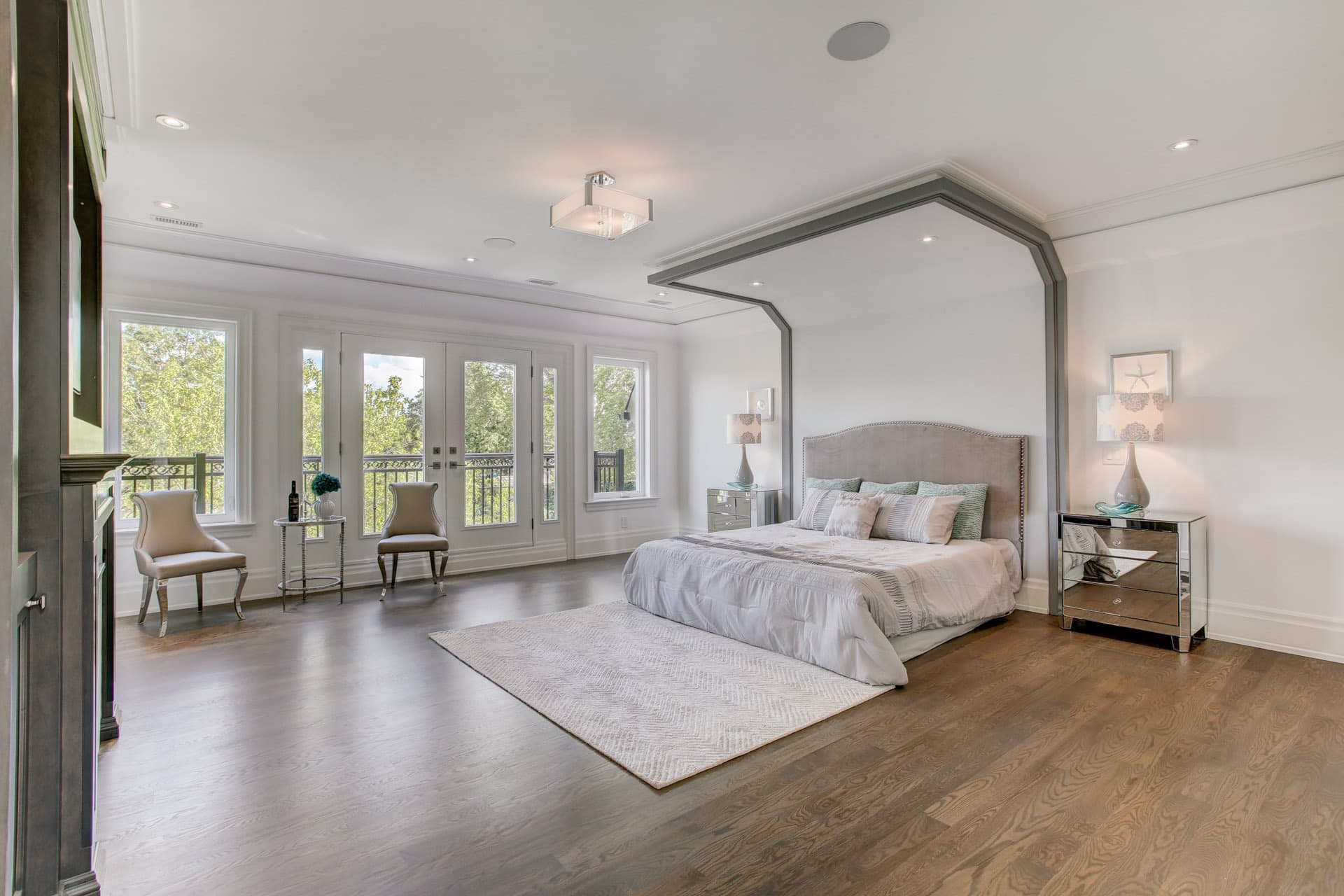
Crown moulding closes the joint where the wall meets the ceiling and gives a room a finished line at the top. The size of that line is the decision that most often goes wrong, because it is usually chosen from a sample in a store rather than against the room.
The rule of thumb
The taller the ceiling, the larger the crown. A small profile in a tall room disappears into the corner. A large profile in a low room pulls the ceiling down and makes the room feel smaller. Standard height ceilings take a modest crown; nine and ten foot ceilings can carry more; double height rooms often need a crown built up from several pieces to read at all from the floor.
Projection matters as much as height
A crown is measured two ways: how far it drops down the wall and how far it reaches out across the ceiling. Two profiles with the same height can look very different if one projects further. In a room with a light fixture or a window close to the ceiling, the projection decides whether it fits.
Match the rest of the trim
Crown reads as part of a set with the baseboard and the door casing. A heavy crown over thin baseboard looks top heavy. If the baseboard and casing are staying, the crown is chosen to belong with them. If everything is being replaced, the three are chosen together.
Ceilings that are not level
Most ceilings are not perfectly level, and crown shows it, because it is a long straight line right against the ceiling. The gap is scribed out rather than filled with caulk, so the crown follows the ceiling and the line still reads straight to the eye.
Before you choose
- Measure the ceiling height in each room, since it often changes across a house
- Hold a short sample up in the corner and look at it from the doorway
- Check what else sits near the ceiling: windows, cabinets, vents and fixtures
- Decide which rooms get crown; halls and main rooms first, low rooms last
More on Crown Moulding & Trim Carpentry in Toronto.
Free quote
Request a site visit. We measure the work ourselves and put the price in writing, at no charge.